
See temperature patterns in context before the next repair decision.
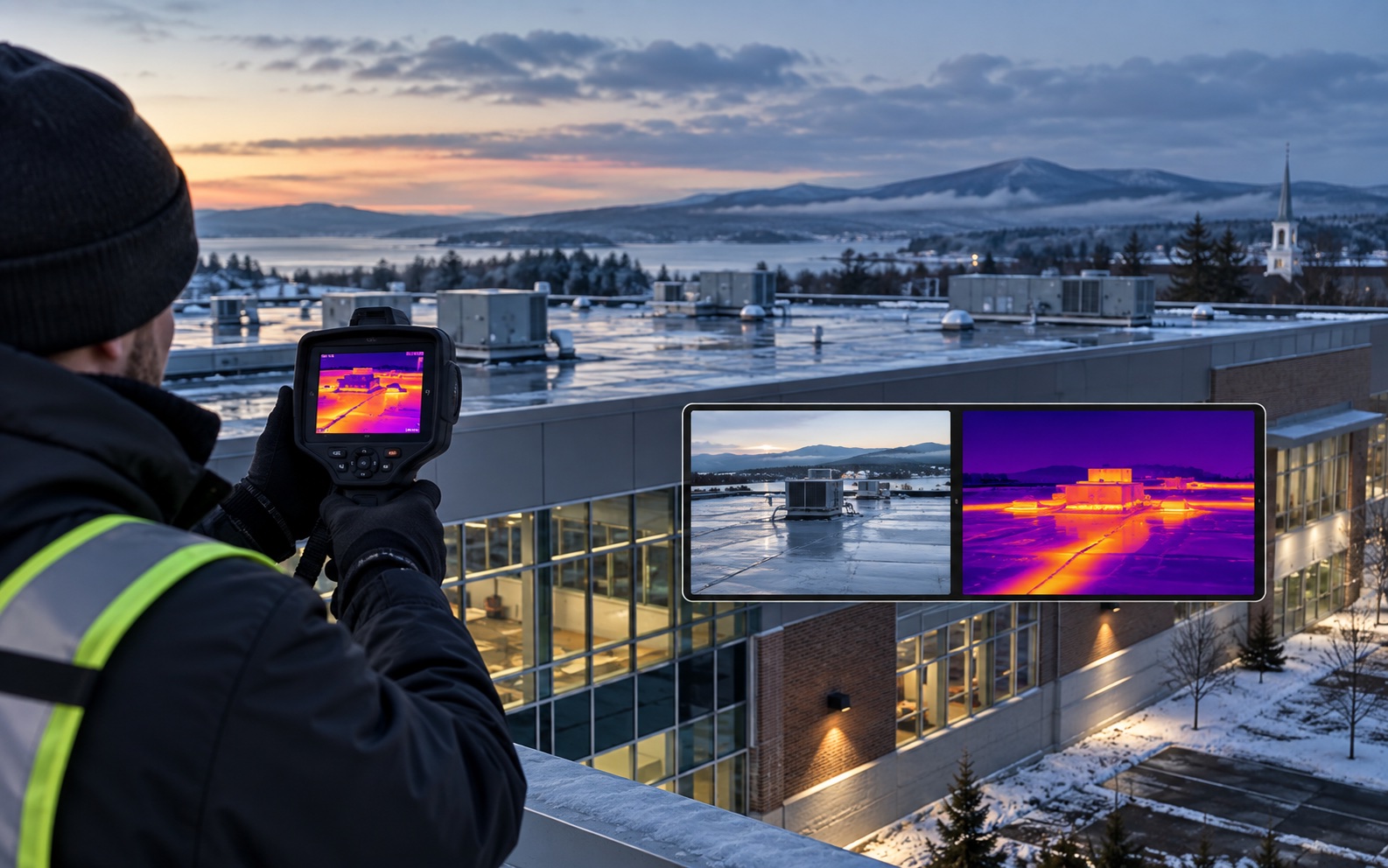
Pair ground or aerial thermal imaging with visible photographs, capture-condition notes, clear limitations, and a practical handoff for further investigation.
- Clear written scope
- Organized final files
- Human-reviewed record
A defined thermal screening record with visible context.
Scope the asset and capture conditions first. Thermal is an observed temperature-pattern record, not a defect, moisture, code, or safety determination.
Capture plan
Confirm areas, access, equipment, weather or temperature conditions, and whether ground or aerial capture is feasible.
Paired evidence
Quote thermal and visible-image pairs, annotated locations, condition notes, and limitations for the agreed areas.
Review handoff
Identify unknowns and when confirmatory testing or the appropriate licensed professional is needed.
Availability, included methods, file quantities, hosting, capture date, and delivery window are confirmed in the written scope after property details, permissions, access, weather, operator or platform capacity, and loaded costs are reviewed. A fixed quote is issued only when it supports the required margin and deposit coverage. Documentation does not replace licensed inspection, engineering, surveying, code, legal, or insurance decisions.
Ground and aerial thermal documentation for focused screening.
NEDD captures and organizes thermal patterns alongside visible imagery, location context, environmental conditions, and clear limitations. Depending on the asset and capture conditions, the scope may use ground-based or drone-mounted thermal equipment.
- Building envelope and insulation-pattern screening
- Roof moisture-pattern and heat-loss documentation
- Water-intrusion investigation support when correlated with other evidence
- Electrical and mechanical hot-spot screening by qualified scope
- Solar, industrial, and large-area aerial thermal documentation where conditions allow
- Baseline and follow-up comparisons
Radiometric context, not a color-picture conclusion.
Packages can include thermal and visible-image pairs, annotated locations, capture-condition notes, priority areas for follow-up, and report-ready findings with observed, inferred, and unknown conditions separated.
Scope controls: weather, solar loading, wind, temperature difference, surface materials, moisture, altitude, access, and equipment suitability affect what thermal capture can show.
Thermal becomes stronger when paired with the right evidence.
Drone Thermal + Visible Capture
Pair aerial thermal patterns with high-resolution visible imagery and organized location context.
View service →Moisture Correlation
Use appropriate moisture measurements and visual evidence to investigate whether a thermal pattern warrants follow-up.
View service →Building Diagnostics
Combine thermal, visual, moisture, spatial, and subsurface information in one decision-support record.
View service →Matterport Spatial Context
Preserve an immersive room-by-room record alongside thermal observations for coordination and future reference.
View service →Professional boundary
Thermal imaging identifies temperature patterns under the conditions present during capture. A pattern alone does not prove moisture, missing insulation, an electrical defect, structural damage, or code noncompliance. Confirmatory testing and licensed professional review may be required.