See visible storm impacts before cleanup changes the record.
Capture roofs, exteriors, access, drainage, trees, outbuildings, shorelines, and other visible conditions after wind, snow, ice, rain, flood, or fire events.
Create the first organized post-event record.
A focused visit can help remote owners understand access, visible damage, immediate contractor needs, and whether a licensed inspector or emergency provider should be engaged.
What can be included
- Ground and aerial post-event overview
- Roof, exterior, tree, access, drainage, and site-condition imagery
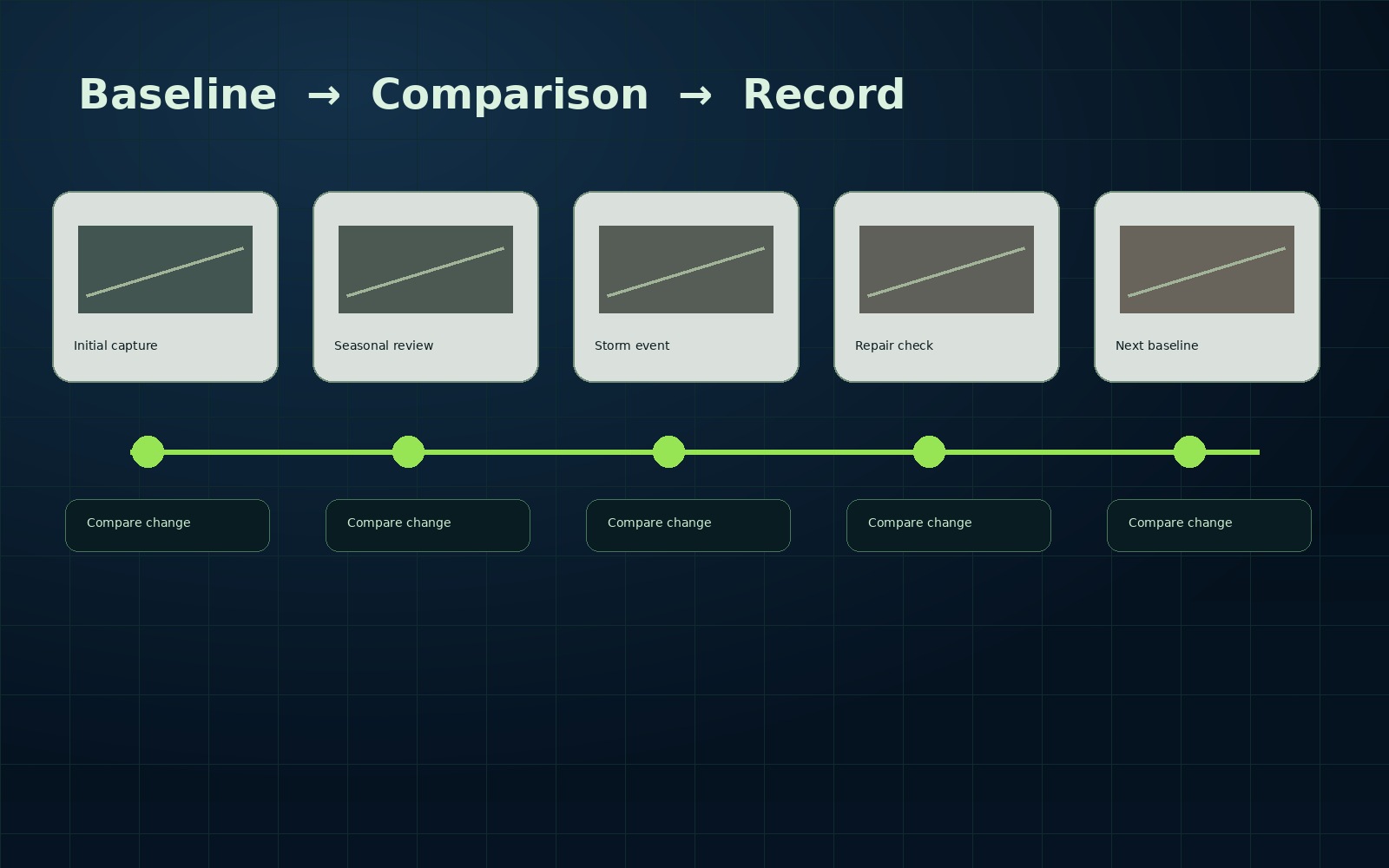
- Before-and-after comparison when a baseline exists
- Visible-priority and unknown-condition register
- Owner, contractor, or claim-communication evidence folder
Remote owners, estates, municipalities, property managers, and insurers.
Useful when the owner cannot reach the property quickly or a consistent record is needed before cleanup or repair.
Popular combination: Pre-event baseline + storm-triggered visit + evidence folder + repair verification.
Combine field capture, remote review, and organized delivery.
NEDD scopes each assignment around access, timing, permissions, weather, technology compatibility, the decision being made, and the people who need to review the result.
What to send for an accurate scope.
- Property or project location, approximate size, and access contact
- The specific areas, assets, concerns, or features to document
- Who will attend remotely and what device or review format they prefer
- Required date, urgency, recurring schedule, and desired deliverables
- Any available listing, plan, inspection, claim, contractor, or prior-condition records
Professional boundary: NEDD does not enter unsafe or restricted areas and does not make coverage, causation, structural-safety, code, or emergency-response determinations.